Authors

Spencer Cannon is a second-generation Mormon transhumanist, raised with these ideals from a young age by his parents—including his father who has presented at Mormon Transhumanist Association (MTA) conferences. His upbringing has fostered a unique perspective where his relationship to religion is very scientific, and his relationship to science is very religious. Spencer first attended an MTA meetup around the age of 13 or 14 and has found the community and intellectual banter particularly valuable for expanding his mind. Outside of his engagement with the MTA, Spencer is involved in the performing arts. He and his wife are both theater performers, working as actors. This involvement has provided him a unique perspective on the potential impact of emerging technologies like AI, particularly regarding anxieties within the artistic community. Spencer’s transhumanist views drive him to engage in the cultural discourse surrounding technological advancements to emphasize personal responsibility in building a beautiful future where technology can raise one another up, making the world more equitable, safer, smarter, kinder, more loving.

Steven Christiansen holds a PhD in biochemistry from Brigham Young University and spent over a decade teaching chemistry and neurobiology in academia. He is Associate Director of Commercialization at the University of Utah Technology Licensing Office, where he leads technical and commercial diligence on therapeutics, diagnostics, medical devices, and emerging AI technologies. He served as Medical Strategy Director for the Utah Patient Coalition and delivered the keynote at the 2025 Psychedelic Society Conference. He is Chief Operating Officer and Vice President of the Mormon Transhumanist Association.
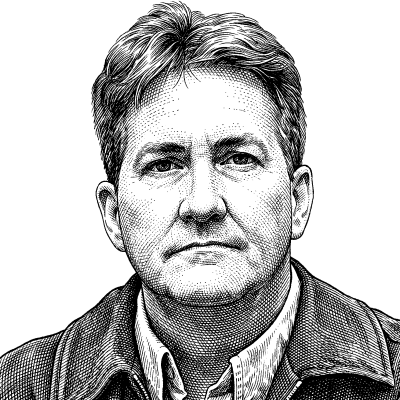
Steven Peck is a scholar whose interests lie at the intersection of science, ethics, and faith. His work reflects a fascination with future technologies and their implications, exemplified by his collaborative publications with students on topics ranging from the ethics of pregnancy on Mars to the use of neuroimaging for communication with individuals experiencing locked-in syndrome. These projects, published in mainstream bioethics journals, showcase his engagement with cutting-edge advancements and their potential impact on humanity. Beyond future technology, Dr. Peck harbors a deep appreciation for the natural world, particularly insects such as ants and bees. This interest extends beyond mere observation, as demonstrated by his anecdotes of field experiments involving insects and his reflections on evolutionary efficiency. His connection to the Mormon Transhumanist Association is evident in his willingness to explore the ethical and spiritual dimensions of scientific progress, blending scientific inquiry with theological considerations. Dr. Peck’s academic endeavors reflect a commitment to exploring complex ethical dilemmas arising from advancements in science and technology. His unique perspective, informed by both scientific curiosity and a strong foundation of faith, positions him as a notable voice within the Mormon Transhumanist community.

Dr. Suzanne Harrison , MD, is a physician and esthesiologist at Riverton Hospital. She is actively involved in Utah politics, having served in the Utah House of Representatives since 2018, representing the Sandy and Draper area. Dr. Harrison recently ran for the Salt Lake County Council at Large, demonstrating her commitment to public service and addressing issues affecting her community. Dr. Harrison’s educational background includes a degree from Stanford University and medical school at the University of Utah. She completed her residency at Harvard Medical School. These experiences have provided her with a strong foundation in medicine and a broad perspective on healthcare innovation, topics she addresses through her work in the Utah legislature. Beyond her professional life, Dr. Harrison enjoys spending time with her husband, John—a VP of Engineering—and their three high school-aged children. She participates in outdoor activities such as mountain biking and pickleball, reflecting a balanced lifestyle and appreciation for the Utah landscape. Her interest in incentivizing clean energy, electric vehicles, and addressing challenges like childhood poverty and gender pay gaps align with transhumanist values of improving human well-being and societal progress.

Tamara Kneese is a researcher and author whose work examines the ethical and environmental implications of technology, particularly concerning digital afterlives and artificial intelligence. Her recent book, Death Glitch: How Techno-Solutionism Fails Us in this Life and Beyond , explores the material infrastructure and collective labor required to maintain digital representations of the deceased, questioning the true cost of keeping the dead alive online. She focuses on the intersection of technology, ethics, and sustainability. Kneese’s research delves into the labor and environmental impact needed for AI systems, specifically how this plays a role in digital preservation of loved ones. This work focuses on the energy consumption and sustainability challenges associated with data centers and AI, particularly in the context of maintaining digital legacies on a fragile planet. She highlights the often-overlooked labor performed by women and marginalized groups in maintaining these systems. Kneese has engaged with Mormon Transhumanist Association (MTA), attending their conference in Provo in 2019 as part of her book research. She is interested in the combination of religious cosmologies and technological life extension, emphasizing the MTA’s ancestrally oriented approach to transhumanism and kinship networks.

Tom W. Bell is a legal scholar and consultant with a diverse background spanning philosophy, law, and theology. His intellectual journey has taken him from a Methodist upbringing through phases of militant atheism and struggling agnosticism, culminating in what he terms “recreational theology.” He holds a BA in philosophy from the University of Kansas, an MA in philosophy from the University of Southern California, and a JD from the University of Chicago. Bell currently serves on the faculty of the Chapter University, Bowie School of Law, where he teaches first-year common law courses and electives in high-tech and intellectual property law. His scholarly publications cover a wide range of topics, including copyright, international law, polycentric law, constitutional law, prediction markets, and the Third Amendment. He is also the author of Your Next Government: From the Nation-State to Stateless Nations (Cambridge University Press, 2017). Through his consulting firm, Archimediate LLC, Bell advises companies developing special economic zones, focusing on the design, installation, and support of entire legal systems. His recent work explores the intersection of theology and simulation theory, presenting arguments for an “authored universe” that resonate with themes relevant to transhumanist and Mormon thought. Bell has presented his views at conferences such as the MTA conference to encourage dialogue regarding the idea of creation.

Tomicah Tillemann is a partner and global chief policy officer at KRH Partners, a cryptocurrency venture fund led by former A16Z general partner, Katie Hahn. In this role, he focuses on building the public policy architecture to support the next generation of the Internet. A frequent speaker on the intersection of technology and theology, he brings both spheres together in his work and thought. Prior to joining KRH Partners, Tillemann served as senior advisor to two Secretaries of State, leading a team that developed 20 major initiatives across 55 countries. He previously served as Hillary Clinton’s speechwriter and spent four years on the staff of the Senate Foreign Relations Committee, working with Joe Biden, Barack Obama, and John Kerry. He has spearheaded programs addressing social impact, finance, and governance challenges on a global scale. Tillemann’s experience includes serving as Executive Director of the Digital Impact and Governance Initiative at New America, as well as membership in the World Economic Forum’s Center for the Fourth Industrial Revolution, the United Nations World Food Program Innovation Advisory Council, and the Lantos Foundation Board of Trustees. He is also Chairman of the Global Blockchain Business Council. Dr. Tillemann holds a BA magna cum laude from Yale University and a PhD with distinction from the School for Advanced International Studies at Johns Hopkins University. He is a member of The Church of Jesus Christ of Latter-day Saints and spoke at the MTAConf 2022 about the decentralization of power.

Trent Larson got a computer science PhD in 2002, then went to write software for industry. In 2014, he helped establish Medici Ventures, creating the first SEC-approved cryptocurrency-based stock exchange; he then worked for Medici Land Governance, documenting land rights with blockchain and securing identities with cryptography. His not-for-profit work on the side involves GiftEconomies.org supported by the app at TimeSafari.org , with the goal to allow fully peer-to-peer operations; he is also on the board of BridgeFoundation.community for affordable construction and agriculture at the Riverbed Ranch.

Ugo Perego is a senior researcher at the Sorenson Molecular Genealogy Foundation and a native of Italy. He holds a doctorate in molecular biology and specializes in genetics at the molecular level. His work encompasses both anthropological investigations of human migration and genealogical research, tracing family history through molecular biology. Perego’s involvement with the Sorenson Molecular Genealogy Foundation stems from its founder, James LeVoy Sorenson’s, vision to promote understanding and peace through genetics. Sorenson, who passed away in 2008, believed that demonstrating the close genetic relationships between individuals worldwide could foster greater cooperation and empathy, a goal that aligns with transhumanist ideals of improving human life. Perego’s research explores how DNA information and discoveries in the last two decades have revolutionized cultural and religious traditions, as well as changed views of humanity with regard to religions and other fields. He approaches these subjects with the explicit goal of tying them to the Mormon Transhumanist Association’s purpose and values.

Varden Hadfield is a speaker and professional with a deep interest in the intersection of Mormonism and Transhumanism, particularly focusing on the role of Jesus Christ and the concept of grace. He presented at the MTA (Mormon Transhumanist Association) conference, exploring the perceived differences and potential merging points between these seemingly disparate fields. Since 1999, Varden has worked in major gifts for LDS Philanthropies at BYU. Prior to that, he contributed to the American Lung Association of Colorado and the Research Information Division of The Church of Jesus Christ of Latter-day Saints. His educational background includes a Bachelor of Science degree in Sociology from BYU and a Master of Arts degree in Philanthropic Studies from Indiana University. A convert to the LDS Church multiple times throughout his life, Varden served a mission in Detroit and is currently a scoutmaster in Orem, Utah. He is married with six children and enjoys a variety of hobbies including backpacking, dancing, fiddling, and woodworking. He also finds personal satisfaction in running.