Authors

James Carroll is a speaker and thinker focused on the drivers of technological progress and their implications for the future. He presented at the MTAConf 2014, examining the rate of technological change and questioning whether it is linear or exponential. His 2014 presentation sought to temper overly confident singularitarian views, such as those proposed by Raymond Kurzweil, suggesting that an exponential trajectory was uncertain at best. Building on his previous work, Carroll’s subsequent research has extended the discussion to include additional paradigms for innovation, specifically invention and specialization, trade, and the economics of scale (referred to as the ‘scale’ paradigm). He explores the relationships between these paradigms and population growth, arguing that technology impacts population size by enabling larger populations through advances in food production, reduced epidemics, and lower infant mortality rates. Carroll’s work considers both the impact of technological progress on society, and the societal factors that drive innovation. He argues that understanding these forces is crucial for assessing the potential for transhumanist visions to be realized, and for navigating the future of humanity in a rapidly changing world.

James L. Driessen is a Utah-based attorney, inventor, and active voice at the crossroads of law, technology, and transhumanist thought. With a career spanning over two decades in claims and litigation, he has focused his professional and intellectual energies on the systems—legal, digital, and mechanical—that govern human interaction and commerce. Currently serving as the Claims & Litigation Manager for Subrogation Division, Inc. in Spanish Fork, Utah, his work emphasizes the rigorous application of accountability within complex frameworks. In his presentation at the MTAConf 2012, titled “Foundations of Skeptical Operating Systems,” Driessen explored the critical need for robust methodologies in processing information and reality. Drawing on his legal background, he addressed the challenges of navigating systems where truth and functionality are often obscured. His concept of a “Skeptical Operating System” proposes a disciplined approach to validating data and experience, resonating with broader transhumanist inquiries into artificial intelligence, simulated realities, and the precise preservation of identity. Beyond his philosophical contributions, Driessen is the inventor of U.S. Patent No. 10,304,052, a “Retail Point of Sale Apparatus for Internet Merchandising.” This invention, designed to bridge the physical and digital worlds by facilitating web access through retail transactions, demonstrates his early recognition of the convergence of offline and online economies. His legal career includes defending such intellectual property, notably representing his interests in patent litigation against major global retailers to ensure the integrity of his innovations. Driessen’s work stands as a testament to the transhumanist goal of enhancing human capability through technology and rational inquiry. By applying the skepticism of a litigator to the optimism of a futurist, he embodies the drive to not only understand the future but to actively shape the structures that will support it. His diverse contributions highlight a commitment to ensuring that the “operating systems” of law, commerce, and human potential function with both precision and purpose.
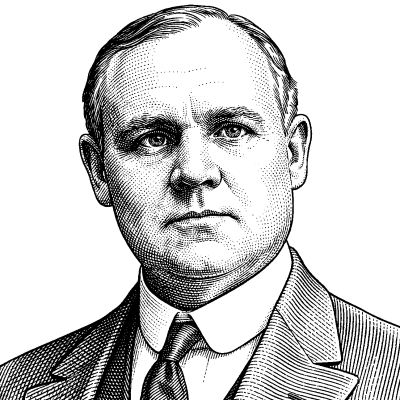
James E. Talmage
James Edward Talmage (1862–1933) was an Englishborn scientist and religious leader who served as a member of the Quorum of the Twelve Apostles of The Church of Jesus Christ of Latter-day Saints from 1911 until his death. Born in Hungerford, England, he emigrated with his family to Utah in 1877 and began teaching at Brigham Young Academy at age sixteen. Talmage pursued advanced studies in chemistry and geology at Lehigh University and Johns Hopkins University, receiving his Ph.D. from Illinois Wesleyan University in 1896. He served as president of the University of Utah and was elected a Fellow of the Royal Microscopical Society, the Royal Scottish Geographical Society, and the Geological Society of London. At the request of the First Presidency, Talmage wrote Jesus the Christ , completing much of it in a room set aside for him in the Salt Lake Temple. Published in 1915, it remains one of the most influential Latter-day Saint works on the life and ministry of Jesus Christ. His other significant works include The Articles of Faith and The Great Apostasy .

James Felton Keith is an engineer, economist, and author known for his pioneering work in “Inclusionism,” a bio-political philosophy advocating for the economic recognition of every individual’s intrinsic value. His intellectual roots are deeply intertwined with the examination of systemic structures, as highlighted in his MTAConf 2012 presentation, Integrationalism: Spiritual Disincentives for Humanity . Here, he argued against traditional frameworks that hinder human progress, proposing instead an integrated approach that aligns technological advancement with human equity. Transitioning philosophical theory into economic practice, Keith has become a leading voice in redefining personal data as a natural resource. Through his book Data Is Labor and as the founder of the International Personal Data Trade Association (IPDTA), he posits that the digital information individuals generate constitutes a form of labor essential to corporate productivity. Consequently, he advocates for a “data dividend,” establishing legal and economic frameworks to return value directly to the people who create it. Bridging the “mind of a CEO and the heart of a social worker,” Keith’s work continues to shape the global dialogue on human rights in the digital age. His efforts to standardize inclusion and monetize personal data seek to ensure that the benefits of the Fourth Industrial Revolution are universally distributed. By treating human life as the ultimate asset, Keith offers a roadmap for a future where economic systems are designed to sustain and empower humanity.

James Hughes
James J. Hughes is an American sociologist and bioethicist who serves as the executive director of the Institute for Ethics and Emerging Technologies. He is a leading advocate for democratic transhumanism. Hughes earned his PhD in sociology from the University of Chicago and has taught at Trinity College in Hartford, Connecticut. He is the author of Citizen Cyborg: Why Democratic Societies Must Respond to the Redesigned Human of the Future. His work explores the compatibility of religious and transhumanist views of metaphysics, consciousness, and human transformation. He argues that many religious traditions, including those that emphasize theosis or human divine potential, share common ground with transhumanist aspirations for human enhancement.

James McLean Ledford is a Christian transhumanist thinker and technologist whose work explores the convergence of faith, reason, and emerging technology. He came to broader attention within transhumanist circles through his participation in the Transhumanism and Spirituality conference held in 2010, where he presented on the theme of Christian transhumanism—situating the aspirations of the transhumanist movement within the theological and philosophical traditions of Christianity. In his 2010 presentation at the Transhumanism and Spirituality Conference, Ledford engaged with questions central to the Christian transhumanist philosophy: the moral imperative to overcome suffering and death, the relationship between human creativity and divine purpose, and the compatibility of technological enhancement with Christian anthropology. Drawing on scriptural and theological sources, he argued that the pursuit of radical human transformation need not stand in opposition to Christian faith, but may in fact represent a fulfillment of humanity’s God-given capacity for reason, creativity, and stewardship. His perspective reflects a tradition of thought that sees science and technology not as rivals to spiritual life, but as instruments through which humanity participates in an ongoing work of creation and redemption. Ledford’s engagement with these themes places him within a growing ecumenical movement of religiously committed transhumanists who seek to articulate a vision of the future that is at once technologically ambitious and spiritually grounded. Unlike secular transhumanism, which often brackets or dismisses metaphysical commitments, Christian transhumanism—as Ledford and others have framed it—insists that the deepest motivations for overcoming human limitation are themselves theological: rooted in love, hope, and the belief that creation is oriented toward flourishing. His work remains a meaningful contribution to the ongoing conversation between religious communities and transhumanist philosophy, a dialogue that the Mormon Transhumanist Association has been instrumental in fostering since its founding. Ledford’s willingness to engage these questions publicly, and to articulate a coherent Christian framework for thinking about technological transformation, reflects the kind of intellectually serious, spiritually committed engagement that this conversation requires.
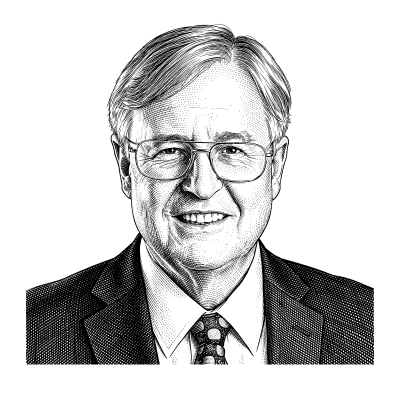
James N. Gardner
James Nelson Gardner (May 5, 1946 – April 10, 2021) was an American lawyer, complexity theorist, and author whose cosmological speculations placed intelligence at the generative center of the universe itself. A Yale College and Yale Law School graduate, he served as a U.S. Supreme Court clerk and Oregon state senator before devoting much of his intellectual life to a far more expansive question: why does the universe appear so precisely calibrated to produce life and mind? Gardner’s answer, developed across peer-reviewed articles in Complexity and the Journal of the British Interplanetary Society and popularized in his books Biocosm (2003) and The Intelligent Universe (2007), was the “Selfish Biocosm” hypothesis. He argued that life and intelligence are not Darwinian accidents but are hardwired into cosmic evolution—that the universe’s bio-friendliness is the inheritance of a long lineage of intelligences who, in reaching the apex of their development, reproduced the cosmos itself by spawning “baby universes” endowed with the same life-generating properties. In Gardner’s vision, the destiny of highly evolved intelligence is nothing less than the infusion of the entire universe with life and the ultimate act of cosmic creation. For those who hold that intelligence is eternal and that divine creativity operates through natural processes, Gardner’s cosmology resonates with striking depth. The arc of his thought—intelligence as not merely a product of the cosmos but its architect and heir—maps naturally onto the Mormon transhumanist conviction that humanity’s progression toward Godhood is a real, physical, and cosmologically significant endeavor. Gardner did not speak in theological terms, but his insistence that the emergence of mind is the universe’s most consequential fact, and that sufficiently advanced intelligence becomes a creative force on a universal scale, opens conceptual ground that faith traditions oriented toward theosis and eternal progression have long inhabited from a different direction.

James Wigginton is an Of Counsel attorney at Orrick, Herrington & Sutcliffe LLP in Sacramento, California, where he advises entrepreneurs and investors as they pioneer new, more inclusive operating models in professional sports, finance, social media, gaming, agriculture, and other industries. Wigginton has demonstrated a keen interest in emerging technologies, notably diving into Web3 in 2021 by working on projects involving DAO-governed buyouts of professional sports teams and the creation of DAO-friendly business entities in collaboration with a Northern California Native American tribe. Prior to joining Orrick, Wigginton was an attorney at Downey Brand LLP and gained earlier experience at Sullivan and Cromwell LLP. After law school, he clerked for the United States Court of International Trade in New York City. His academic background includes a BA in International Relations from Brigham Young University (2009), a Master’s in Philosophy in International Studies from the University of Cambridge (2011), and a JD from Stanford Law School (2013). At the MTAConf 2022, Wigginton presented on the topic of digital communities and their potential to learn from ancestral wisdom in the context of Web3 development. His talk, “The Things We Forgot, or How Digital Communities Can Unload the Baggage of Modernity and Keep the Good Stuff,” emphasized the importance of historical context and human connection in building a better, decentralized future.

Jared Anderson is a scholar of religion with a particular focus on the intersection of human limitations, religious power, and the potential of religious humanism. His work emphasizes the importance of understanding and harnessing religion’s enduring influence in the face of human cognitive biases and the need for societal evolution. Anderson’s intellectual journey involved a re-evaluation of Mormonism through graduate studies and the subsequent exploration of world religions. This experience led him to recognize the pervasive impact of humanity on religion, a puzzle he continues to engage with. His research examines religion as a cultural technology, exploring its origins in managing belief in evil spirits and its subsequent evolution through tribal, agricultural, and Axial Age developments. He frames the present state of religion as an outdated cultural technology, advocating for a proactive approach to redirecting its influence in a rapidly changing world. His current focus is on facilitating the continuation of civilization infrastructure until the Singularity, a race against the death between innovation and cataclysm. His presentation given at the Mormon Transhumanist Association Annual Conference highlights his efforts to challenge and correct the limitations humans are so prone to.

Jason Anthony is a religion journalist and games designer based in New York City. He brings a unique perspective to discussions of next-generation religion, shaped by his diverse experiences and intellectual curiosity. Anthony’s career has spanned various aspects of the media landscape. He has served as the editor of America’s oldest religious magazine and written extensively about the national faith landscape. His observations and reflections following the events of September 11th at the World Trade Center—where he witnessed the intense religious reactions and motivations—led him to delve deeper into the study of religion. Driven by both personal experience and the evolving media landscape, Anthony’s work now extends to the realm of game design. This exploration is epitomized by his project, “The Ten Year Game,” an initiative through which he explores future religious frameworks. Anthony’s involvement in business writing and familiarity with both legal and illegal gambling traditions further enrich his understanding of complex systems and human behavior, lending a multifaceted perspective to his projects.