Authors
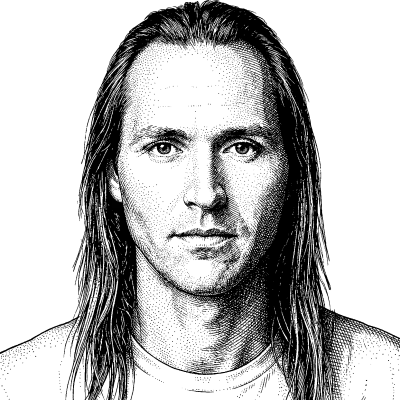
Matthew Lehmitz is a researcher focused on astrobotany, specifically the cultivation of plants in space environments. His work centers on developing sustainable methods for incorporating plant life into space missions and habitats, addressing the challenges of resource constraints and the need for self-sustaining ecosystems beyond Earth. Lehmitz’s current project involves utilizing Tillandsia ionantha (air plants) within a 3U CubeSat to simulate a micro-habitat in orbit. This approach aims to circumvent the complexities and weight limitations associated with traditional soil-based cultivation methods. By demonstrating the viability of air plants in space, he hopes to pave the way for more efficient and cost-effective strategies for creating plant-based ecosystems in extraterrestrial settings—a key consideration for long-duration space travel and colonization.
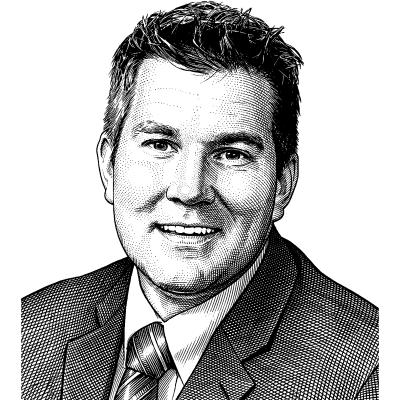
Dr. Matthew Memmott is a director and senior technical advisor for Alpha Tech Research, a technology startup focused on developing an advanced micro molten salt reactor. This innovative reactor design aims to provide twelve megawatts of inherently safe nuclear energy, while also producing valuable medical isotopes as a byproduct. His work positions him at the forefront of next-generation energy solutions. In addition to his role at Alpha Tech Research, Dr. Memmott is a professor in the chemical engineering department at Brigham Young University (BYU). He earned his bachelor’s degree in chemical engineering from BYU in 2005, and subsequently pursued advanced studies at MIT, where he obtained a master’s and PhD in nuclear science and engineering. His academic research centers on advanced nuclear reactor design, nuclear safety, and system modeling—all fields crucial for ensuring a sustainable and secure energy future. Dr. Memmott’s work aligns with transhumanist values by exploring how advanced technology can be leveraged to improve human well-being and sustainability. His exploration of nuclear energy, particularly inherently safe designs, reflects a desire to overcome challenges and create abundance. He is particularly interested in the distributed systems and blockchain applications in the energy realm.
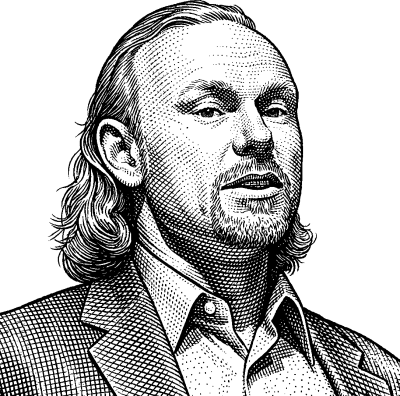
Max More is a prominent figure in the transhumanist movement. While his recent work has focused on decision-making and guiding progress through policy, his early work explored the spiritual elements of transhumanism. He sees transhumanism as encompassing both technological advancement to overcome human limitations and a continuation of humanist ideals from the Enlightenment. More is known for his work on the concept of Extropy, defined as a metaphor for increasing order, information, intelligence, well-being, and creativity—the opposite of entropy. This concept embodies the idea of continuous improvement rather than static perfection. He explicitly addressed transhumanism within the context of religion, agnosticism, atheism, and the search for meaning in his 1989–1990 article, “Transhumanism: Towards a Futurist Philosophy,” published in Exodus Magazine . More views transhumanism as a dual endeavor: one aspect aims to transcend human limitations through technology, altering genes, biology, and neurology to overcome limits to lifespan, intelligence, and emotional capabilities. The other emphasizes transhumanism as an evolution of humanism, rooted in Enlightenment ideals.
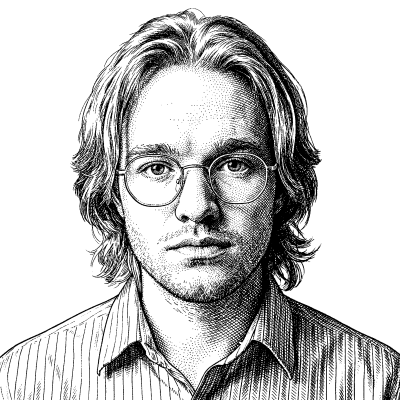
McKay Moore is a speaker and scholar affiliated with the Mormon Transhumanist Association (MTA), exploring the intersection of Mormon theology and transhumanist thought. His work delves into the theological implications of post-humanism, particularly within the unique context of Mormon beliefs about divine progression and the potential for humanity to achieve godhood. Moore’s research is deeply rooted in the Mormon concept of an eternal cycle of creation, where beings evolve into gods who then create new sentient beings. Moore’s presentations often address complex issues such as the ‘control problem’ in artificial intelligence (AI) and how Mormon theology might offer a unique perspective on aligning AI with human values. Drawing on the work of thinkers like Nick Bostrom, he analyzes capability and behavioral control methods for managing advanced AI, exploring how these approaches relate to the Mormon ‘plan of salvation’ as a post-human solution. His work seeks to bridge the gap between cutting-edge technological advancements and theological frameworks.
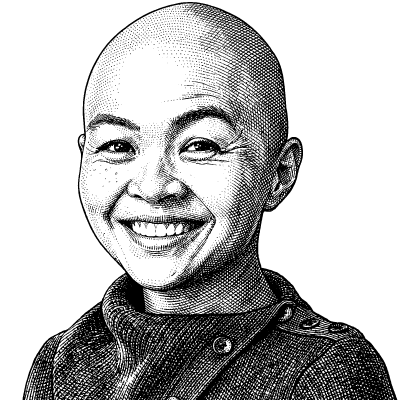
Melissa Wei-Tsing Inouye
Melissa Wei-Tsing Inouye was a scholar and historian who explored the intersection of religion and culture in Greater China, global Mormonism, and 20th-century Chinese Christianity. She received her PhD in East Asian languages and civilizations from Harvard University in 2011. Her major work, China and the True Jesus: Charisma and Organization in a Chinese Christian Church (Oxford University Press, 2019), provides a comprehensive history of the True Jesus Church and charismatic Christian movements in modern China. In addition to her academic research, Inouye was a prolific writer and essayist known for her candid reflections on faith, motherhood, and the global church. Her memoir, Crossings: A Bald Asian American Latter-day Saint Woman Scholar’s Ventures through Life, Death, Cancer, and Motherhood (2019), and her subsequent book, Sacred Struggle: Seeking Christ on the Path of Most Resistance (2023), examined the role of suffering and community within the Latter-day Saint experience. She was also a founding member of the Global Mormon Studies research network and served on the advisory board of the Neal A. Maxwell Institute for Religious Scholarship. Inouye passed away on April 23, 2024, at the age of 44, following a seven-year battle with colon cancer. She is remembered for her work bridging Chinese history, global religious movements, and transhumanist ideals, as well as for her commitment to fostering a more inclusive and globally-aware religious community.

Micah Redding is a multifaceted individual with a diverse background. He spent his formative years as a preacher’s kid before transitioning into a career as a rock musician for eight years. He has also had a mysterious experience involving a high-speed pursuit of a spy plane. Currently, Micah focuses on software development and writing, exploring the intersection of human values and technology. He is particularly interested in exploring Christian views of resurrection and how they apply to transhumanism. Micah is a key figure in the Christian Transhumanist movement. He is a founder, board member, and the Executive Director of the Christian Transhumanist Association.

Michael Ferguson is a neuroscientist, researcher, and educator whose work explores the biological foundations of spiritual experience and the intersection of cognitive science and theology. A prominent voice in the dialogue between Mormonism and transhumanism, Dr. Ferguson is widely recognized for his pioneering research into the “religious brain,” seeking to understand how profound spiritual states are mapped within the human nervous system. Dr. Ferguson’s academic journey began with a focus on physics and communication, but his interest soon shifted toward the complexities of the human mind. He earned his Ph.D. in Bioengineering from the University of Utah, where his doctoral research gained international attention. During this period, he led a landmark study using functional magnetic resonance imaging (fMRI) to monitor the brain activity of devout Latter-day Saints as they reported “feeling the Spirit.” This research identified specific activation in the nucleus accumbens—a region of the brain associated with reward and dopamine—suggesting that spiritual experiences leverage the same neural circuits involved in music, love, and other deeply meaningful stimuli. Following his doctoral work, Dr. Ferguson completed postdoctoral fellowships at Cornell University and Beth Israel Deaconess Medical Center. He currently serves as an Instructor in Neurology at Harvard Medical School and as a researcher at the Center for Brain Circuit Therapeutics at Brigham and Women’s Hospital. His clinical and research interests have expanded to include the use of brain lesion network mapping and deep brain stimulation to explore the neural circuits associated with religiosity, spirituality, and various neuropsychiatric conditions. A frequent contributor to the Mormon Transhumanist Association, Dr. Ferguson presented “The Religious Brain Project” at the MTAConf 2014. In this and other presentations, he argues that a scientific understanding of spiritual mechanics does not diminish their sanctity but rather provides a “technological” vocabulary for the soul. He posits that by understanding the neural architecture of transcendence, humanity can better cultivate profound experiences of wonder, connection, and ethical transformation.
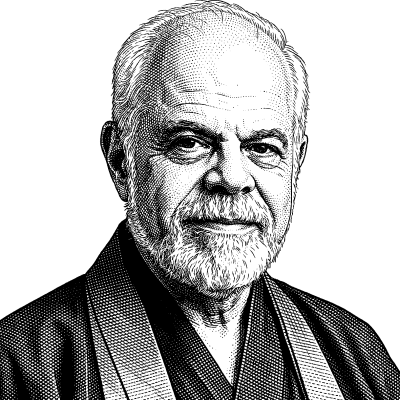
Michael LaTorra
Michael LaTorra (1953-2026) was a retired professor of English at New Mexico State University. He was actively involved in the transhumanist community, having previously served on the boards of Humanity Plus (formerly the World Transhumanist Association) and the Institute for Ethics and Emerging Technologies. His academic work explored the intersection of transhumanism, religion, and spirituality. LaTorra’s publications include the paper “Trans Spirit, Religion, Spirituality, and Transhumanism” in the Journal of Evolution and Technology , and the book A Warrior Blends with Life, A Modern Tao . His presentation at the MTAConf 2014, titled “Where is Heaven?”, delves into the philosophical aspects of transhumanism, exploring the concepts of meliorism, satisficing, and the Buddhist Two Truths doctrine in relation to achieving ultimate reality. Beyond his academic pursuits, LaTorra was an ordained Zen Buddhist priest and previously served as the abbot of the Zen Center of Las Cruces in New Mexico. He was also a formal devotee of Avatar Adi Da Samraj, further underscoring his deep engagement with spiritual traditions.
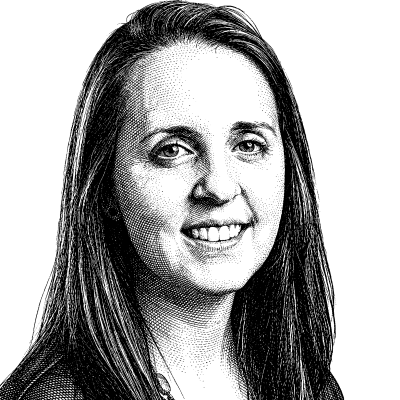
Michaelann Gardner is a speaker who has presented at several Mormon Transhumanist Association conferences. Her presentation at the MTAConf 2019 focused on the impact of family history and ancestral trauma on personal well-being and resilience, particularly in the context of emotional vulnerability and mental health. Gardner’s talk explored the challenges of confronting difficult family narratives and embracing personal messiness and complexity. She drew on personal experiences related to her grandfather, Bert Gardner, and great-grandfather, both of whom struggled with alcoholism and created instability for their families. She connects these family dynamics to broader themes of emotional expression, financial security, and anxiety. She integrates insights from therapy and psychology, referencing research that suggests building resilience through understanding one’s family history. Her work appears to be a combination of personal reflection with family systems and positive psychology.

Michelle Glauser is a software engineer and advocate for diversity and inclusion in the tech industry. Growing up in a large Mormon family in Salt Lake City, she nurtured her early interest in computers through school clubs and experimenting with Visual Basic and HTML. Despite her aptitude, a career in tech didn’t initially seem attainable. After struggling in San Francisco, Michelle discovered her passion for software engineering through an intensive training program, a move that dramatically improved her career prospects and income. This experience opened her eyes to the significant lack of diversity in the tech world, particularly the underrepresentation of women, Latinos, and Black individuals. Driven to address this imbalance, Michelle began organizing meetups and compiling open-source learning resources for aspiring coders. In 2015, she co-created the viral hashtag campaign, #ILookLikeAnEngineer, in response to stereotypes faced by women in tech. The campaign sparked a global conversation about representation and challenged narrow perceptions of what an engineer should be. Michelle is also concerned about the socio-economic disparities in the Bay Area, particularly the displacement of vulnerable populations amidst the tech boom. Her work highlights the potential of technology to empower marginalized groups and promote a more equitable future, aligning with transhumanist ideals of using technology to improve the human condition. Her journey from a Mormon upbringing to tech advocate illustrates a unique perspective on the intersection of faith, technology, and social justice.